WARNING! This review contains story spoilers for the game in question. Read at your own risk.

What is this game?
Super Robot Taisen: Original Generation 2 (OG2) is a Tactical RPG developed by Banpresto for the Game Boy Advance, released in February of 2005 in Japan, and May of 2007 in North America.
This game is a direct sequel to Super Robot Taisen: Original Generation (OG1), both in terms of story and gameplay.
As a quick note for those who played OG1, the story in OG2 takes all the stages from OG1 into the greater canon, with the exception of chapters 32 to Final of Kyosuke’s route, just so that there are no questions about which what material in OG1 is canon.

Story
The story resumes six months after the conclusion of the last game. In the wake of the conflicts against the Divine Crusaders and Aerogaters, the Government has announced the existence of hostile alien lifeforms to the public, and has announced the creation of the Aegis Plan to rebuild their military as a defense against said aliens. However, several people doubt Aegis’ efficacy and plan to establish a military state, with many ex-DC officers spearheading these efforts.
Our heroes will not only have to deal with this threat and a renewed assault from extraterrestrial ‘Inspectors’, but an unknown force whose power and number of mobile weapons exceeds that which should be able to exist, and monstrous entities called the ‘Einst’, who’s origins and purpose are shrouded in mystery.
This time around the story focuses on the plots of Super Robot Wars 3, Super Robot Wars Advance and Super Robot Wars Impact, with elements of Alpha Gaiden also being present, and introduces the characters and mechs from the aforementioned games along with any protagonists and/or their respective mechs from Alpha 1 and Alpha 2.
My opinions
In contrast to OG1, OG2 has one storyline route, with three individual ‘route splits’ where the protagonists temporarily divide their forces to accomplish multiple objectives simultaneously. Another contrast is that while in OG1 you had Super Robot Wars 2’s war against the DC in first half of the game, with Shin/Alpha 1’s fight against the Aerogaters in the second half, in OG2, the storylines of the aforementioned games all interweaved, which means it’s not just the protagonists of the various games, but all the new factions of the Inspectors, Shadow Mirror, Neo DC and Einst that are interacting with one another.
Now, if you think that this is way too many story elements coming together at once, that’s what I thought too, and even now I’ll concede that as a valid point. But once I started playing, I got into the story way more than the previous OG game. I really liked how all the new and old characters interacted with one another, and how you had multiple enemy groups with their own agendas, working with each other while planning to backstab them.
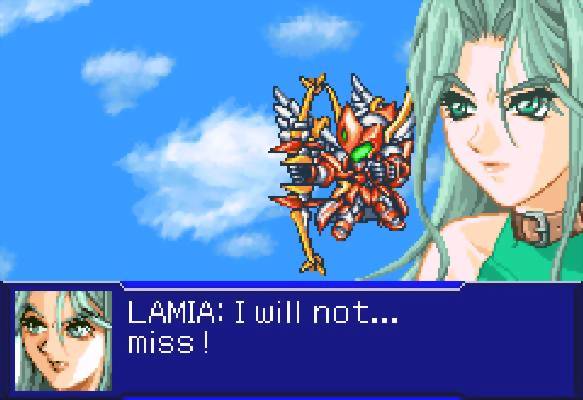
Now, I know this isn’t something everyone will like, but for someone like myself who really gets into complex plots akin to Kingdom Hearts and the original run of Bionicle, this was perfect. I also prefer the way OG2 handles route splits, as there are fewer inconsistencies in the story, and nothing is outright ejected from the canon.
Gameplay
The base gameplay of OG2 is by and large the same. It follows the same turn-based SRPG that OG1 had, Spirit Commands, Will gains and all. The variety of weapons, mech abilities, status effects and pilot skills have been added, the most significant being the Chain Attack skill. If a pilot with that skill uses a weapon with a (c) mark, they’ll be able to attack enemies that are adjacent to one another, up to four depending on the Skill level. This is especially useful for bypassing enemies with Support Defense.
Two things that are greatly expanded upon on this game are Ace Bonuses and Full Upgrade Bonuses. An Ace Bonus is obtained when a pilot gets 50 kills, and games up until SRW GC just had those pilot start the stage with a bonus +5 Will. A Full Upgrade Bonus is attained when you fully upgrade all of a unit’s stats, barring weapons. In previous games when you did so you would get to choose a bonus to one of your unit’s stats, like HP, EN, Armor and the like.
Getting a pilot to Ace status in OG2 not only give the +5 Starting Will, but also an exclusive bonus dependent on the pilot, like Ryusei gaining 10% bonus damage with any weapons requiring the Telekenisis Skill, Kyosuke gaining +10% bonus to Melee weapon damage and the activation rate for his Counter skill, Masaki gets +5% to all damage and +10% to accuracy, and so on. The ability to choose a bonus is gone in this game, but each mech still gets their own custom Full Upgrade Bonus.
My opinions
I feel like these two things add a level of personalization to the game. While the argument can be made if unique, pre-set bonuses are better than choosing a selection of basic enhancements, in my opinion the custom Ace and Full Upgrade Bonuses further help the pilots and mechs stand out from one another, without cheapening the level of challenge of this game.
On that subject, I will admit that OG2 is significantly tougher than OG1. While opinions on why this is probably vary from person to person, I feel that this is because you fight boss-class enemies more often and in greater numbers, and you are forced into scenarios where you are stuck using a small, pre-determined amount of units, sometimes without the opportunity to upgrade and equip them beforehand.
But by no means is the game unfair. You may have some trouble getting every secret/Battle Mastery, but so long as you manage your resources carefully and tough out some of the earlier stages, you’ll be rewarded with an extremely fun time in the long run.
One final improvement to this game is replay value. Not only do you get the option to carry over Money and Pilot Points to New Game+, but you also can choose to play an EX Hard Mode, which as it implies is more difficult than a standard game, and if you beat that you can play Special Mode, which increases the max upgrade value of all your units, allowing them to reach even higher levels of power, and you get one type of EVERY weapon and part after completing Stage 1, basically allowing you to go nuts right from the get-go.
Visuals
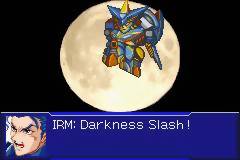
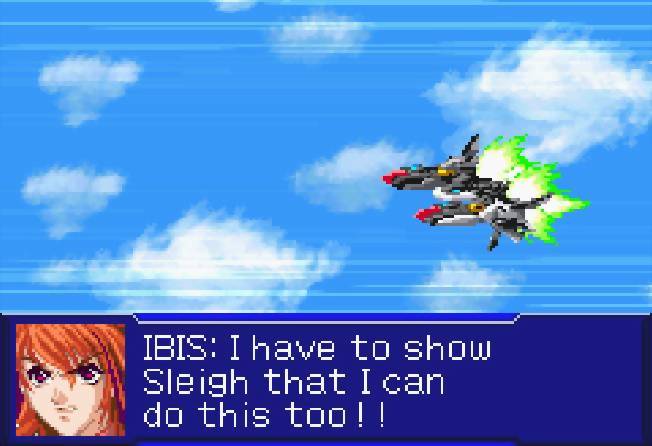
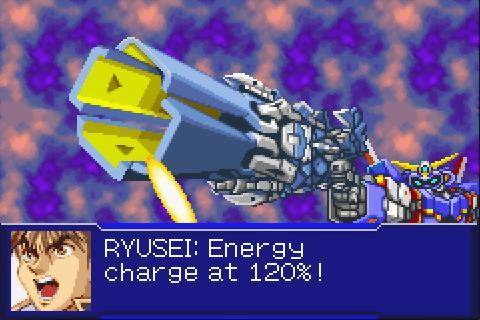
Far and away the biggest step up from OG1 is the visuals. Characters now have a greater variety of expressions for their dialogue-box portraits, allowing for an easier inflection of emotion, and said portraits are slightly cleaner. Special effects have all around been improved. Both the ‘warping in’ effect for when units appear on the map, and the explosions that happen when units are damaged or destroyed are more elaborate and detailed, both in-battle and on the map. And the various attacks in general have more dramatic and smoother flares, flashes, sparks, glows, and the like.
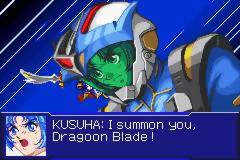
The best improvement, at least in my opinion, is the attack animations for the mechs. They’re no longer as stiff as a poker, now having subtle shifts in their arms and legs as they prep and strike with standard, equippable weapons, even having any armaments on their shoulders slightly shift position. This is amplified for any attacks involving weapons exclusive to a certain unit, as the movement patterns can be personally tailored to that unit’s attack. And when it comes to units’ ultimate attacks, that’s where you’ll see some of the best special effects and cleanest animations the game has to offer, often with full-body cut-ins that are also animated.
The only thing that hasn’t really been improved is the animations for when units take damage or evade, because there still are none. The amount of recoil has been increased to emphasize the impact of hits, but it wouldn’t be until J that we would get animations for damage and evasion. Still, this doesn’t change the fact that OG2 has extremely good visuals, especially for the GBA.
Music
So, the music in this game is kind of a double-edged sword compared to OG1. The upside is that there are many more songs in this game, from chiptune versions of Alpha 2’s music to new arrangements of Advance’s music. The downside is that for some reason that I don’t know, most likely due to memory space issues, the music in this game isn’t as clean as it was in OG1, or even Advance.
As for myself, I find myself in a mixed state on the matter. Some music I think is better arranged than in OG1, like Viletta’s theme, and in a way I actually prefer the OG2 version of Chaos as opposed to the PS2 version, it being more bombastic and dramatic to my ears. But there’s no denying that the quality isn’t as good as it once was. Fortunately this isn’t too big a deal, just don’t play this game on a Gamecube GBA Player.
In addition the technical side of the music has been improved. You now have a small pool of choices for what music you want to assign your units, based on either the mech they’re piloting or the pilot themselves, which means you can either reduce the amount of time you need to hear Born to Fight, or assign it to every unit. Your choice. And once you start New Game +, you also unlock a sound test that was sorely lacking in OG1, along with a bigger choice of music for your units.
Did I enjoy the game?
I loved it.
Most of everything in this game is an improvement over OG1. I went from ‘This is pretty good’ in OG1 to ‘This is a blast’ in this game. And by the end, I had gotten to ‘There are way too many unresolved plot points here, I have to see where they go’. Listening to music extensions may have introduced me into SRW, but it was OG2’s gameplay and story that led me to start importing the Japan-only games, which further led to the creation of this website and its guides, reviews and English scripts.
Would I recommend this game to others?
Absolutely.
If your a fan of Strategy RPGs, then you need to give Super Robot Taisen: Original Generation 2 a shot. With no language barrier for this one, the only difficulty you may have is securing a copy at the time of this writing. But if you get a chance, go for it. And while I can’t guarantee that the mechanics of Super Robot Wars will click with you, if they do, you’re in for a rockin’ good time.
